

Paige Allen ’21 and Professor Stacy Wolf Tackle Misogyny in Musicals


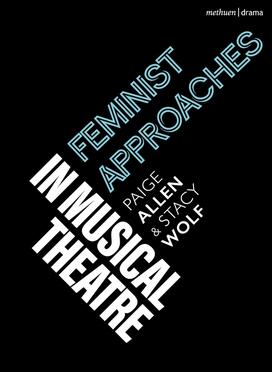
The book: Feminist Approaches in Musical Theatre (Bloomsbury) tackles the misogyny that plagues the musical industry. As part of the Topics in Musical Theatre series, this book explores this contradiction, as most artists and producers are men, despite the fact that musical audiences are often made up mostly of women. Allen and Wolf offer readers a case study of several popular musicals, including The Music Man and Evita, to propose a fresh perspective on how these shows could be viewed through a feminist lens. Feminist Approaches provides a historical analysis to understand the role of feminism in musicals and how it informs both the profession and experience.
The authors: Paige Allen ’21 earned her undergraduate degree from Princeton in English and holds a master’s degree in women’s gender, and sexuality studies from the University of Oxford. She is a writer, researcher, and storyteller based in New York City.
Stacy Wolf is a professor of theater and American studies at Princeton. She teaches seminars on gender and race in the American musical. Wolf is the recipient of several awards including a 2024 Distinguished Scholar award from the American Society for Theatre Research. She is the author of several books including Beyond Broadway and Changed for Good.
Excerpt:
Why analyze musicals from a feminist perspective? How does one do it? And why is such an approach important?
To answer these questions, let’s first consider: Why are musicals important? Musicals are an enormously popular form of entertainment. They’re found on major professional stages on Broadway, the West End, and across the globe; in regional playhouses, community theatres, and school auditoriums. They’re adapted into movies, and their songs become part of popular media. In the 2023–24 Broadway season, more than 12 million tickets were sold to Broadway shows. An impressive number, but as Broadway tickets are the most expensive and exclusive theatre tickets in the United States, these sales represent just a fraction of those who experienced musicals that year. Musicals are not only cultural influences but also commercial products; investors hope to make money from the shows they champion. One of the top highest-grossing films of all time is an (animated) musical, The Lion King (2019), but its stage musical adaptation has grossed six times as much globally: as of 2020, nearly $9 billion.
Like all art forms, musicals engage with and reflect the societies that make them. In the United States and the United Kingdom (this book’s main contexts), our culture advantages men over women (and over nonbinary and genderqueer people) politically, economically, and socially. Our culture relies on strict gendered norms for how people should look and act, and it enshrines gendered power dynamics. As a result, musical theatre (in general) has historically perpetuated and continues to perpetuate sexism.
This systemic privileging of men over women is apparent in how the makers of professional musical theatre, beyond performers, are mostly men. Relatively few women have achieved notoriety as musical theatre composers, lyricists, and librettists; directors, musical directors, and choreographers; or designers, technicians, and producers. Creative teams have historically been, and remain, dominated by white men. Moreover, the remarkable accomplishments of women have been underappreciated and underrepresented in musical theatre history. It matters who is involved in the creation of musicals and who is recognized for their involvement. Artists’ personal identities and experiences necessarily influence creative choices.
Gendered power dynamics not only determine who can make musicals but also what stories those musicals tell. To succeed as a commercial product, a musical must attract a massive audience, please that audience, and continue its run long enough to sell a lot of tickets. This isn’t easy; in fact, 80 percent of musicals on Broadway fail financially. (Some recoup their capital through years of amateur licensing.) While artists’ intentions can be politically progressive, financial pressure often results in musicals that avoid challenging audiences and instead aim for mainstream appeal. As we explore in this book, changing notions of gender, feminism, and women’s roles in society have led to a wider range of roles for women and depictions of gender on stage, even on the most commercial of stages.
Since the 1950s, women have been Broadway’s primary ticket buyers. In recent decades, in part as a result of Wicked’s blockbuster commercial success and popularity, despite opening in 2003 to dismissive reviews by many male critics, musical theatre creatives have become more attentive to the buying power of women and girls. Musicals such as Heathers, Mean Girls, & Juliet, Fun Home, and Suffs target women and girl audiences and tell stories that place women in the spotlight. Some contemporary musicals, such as SIX, have capitalized on feminist branding, firmly linking a “feminist” message to producers’ profit. But, as we’ll see, telling stories about women, marketing stories to women, or even branding a musical as about “girl power” or “women’s empowerment” does not necessarily make a musical feminist. Moreover, the very meaning of “feminism” can prove slippery, given the movement’s complex history.
A feminist approach to musical theatre, in essence, asks questions of any musical: What is gender doing here? What does gender signify? What do we discover about the characters, narratives, and political work of a show by attending to gender?
In this book, we model a collection of feminist methods: tools to interrogate and interpret gendered representations in musicals. These methods, or analytical practices, which intersect and overlap, are not the only tools of feminist interpretation, but they are ones that we have found particularly useful and that we will define and explore in this volume: (1) analyzing the representation of gender; (2) reading against the grain; (3) differentiating page versus stage; (4) acknowledging triple historicity; (5) appreciating affective dissonance; and (6) navigating intersectionality. These methods can be employed to interpret any musical; that is, any and all musicals can be approached from a feminist perspective.
Performances of gender onstage allow us to think about, imagine, and embody performances of gender elsewhere. As prolific composer Jeanine Tesori said in 2015 when she won her first Tony Award for Fun Home, “For girls, you have to see it to be it.” A feminist analysis is a framework for interpretation and for life, opening conversations beyond the theatre.
Excerpted from Feminist Approaches in Musical Theatre by Paige Allen and Stacy Wolf. © 2025 and published by Bloomsbury Publishing. Printed with permission of the authors.
The Latest
See all


Related News


Janice Lee ’09 Worked to Renovate One of Hollywood’s Best-Kept Secrets
An engineer by training, Lee has been deputy project manager on the renovation of Hollywood Burbank Airport


No responses yet