

Scholar Samuel Helfont *15 Recommends Books to Understand Wars in the Middle East
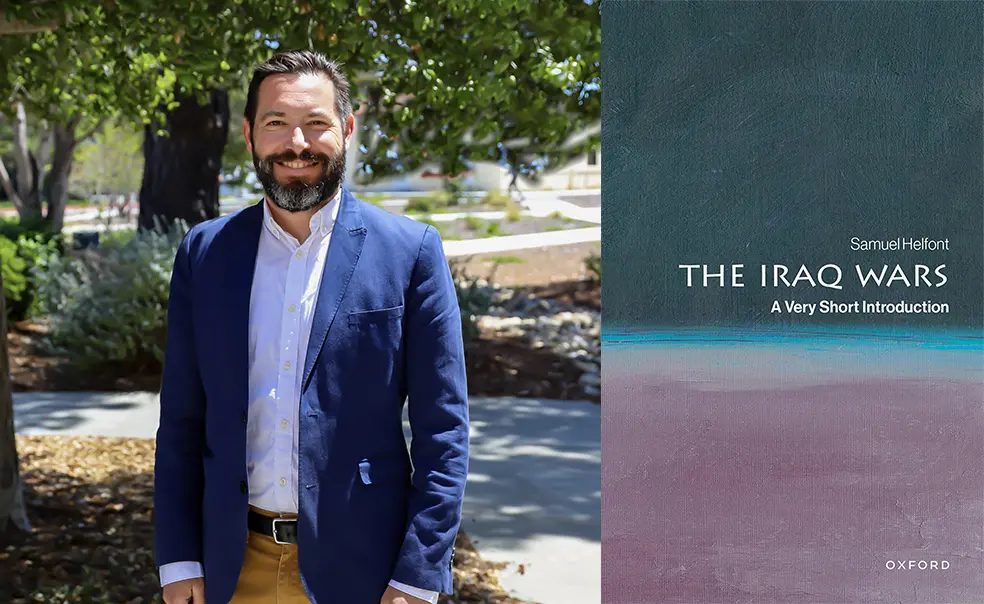

Samuel Helfont *15 graduated from Princeton with a Ph.D. in Near Eastern studies and is currently an associate professor of strategy and policy in the Naval War College Program at the Naval Postgraduate School in Monterey, California. His scholarship is focused on international history and politics in the Middle East. With his latest book, The Iraq Wars, he seeks to give readers an easy-to-digest history of America’s wars in Iraq over nearly 30 years, a series that’s best understood as a chain of events with one conflict leading to the next.
Helfont is also a visiting fellow at Stanford University’s Hoover Institution, and his work has appeared in publications including The Washington Post. In addition to his work in academia, he’s an Iraq War veteran with boots-on-the-ground experience in the Middle East, and he has served as an intelligence officer in both the U.S. Navy and Navy Reserve.
PAW reached out to Helfont, as a seasoned expert on the Middle East, to recommend three books that can help readers understand current events, especially the latest war in Iran, and he suggested these.
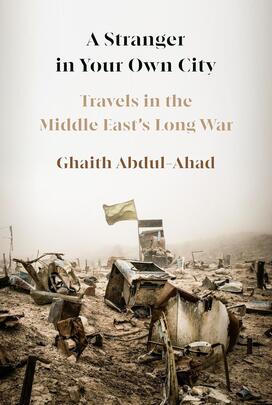
By Ghaith Abdul-Ahad, 2024
I think the best way to understand conflict in the Middle East is through the eyes of the people who live there. Ghaith Abdul-Ahad’s memoir, A Stranger in Your Own City, chronicles life in Iraq from the fall of Saddam Hussein’s regime through the rise of ISIS. He takes the reader onto Iraqi streets and into backroom meetings with militants as Iraq spirals into chaos and civil war, is stabilized, and then is plunged even deeper into crisis. The book picks apart what Western diplomats and military officers thought they were accomplishing in Iraq while also documenting the rise of the sectarian pathologies and rampant corruption that has plagued Iraqi politics.
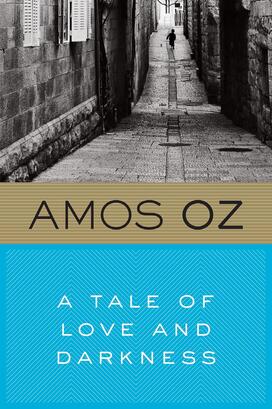
By Amos Oz, 2002
Keeping with the theme of memoir, A Tale of Love and Darkness by Amos Oz offers one of the best windows into the formation of Israel in the 1940s and 1950s. Through Oz’s family, the book covers the arc of modern Jewish and Zionist history, and how they converge into a conflict over Palestine following World War II. The book’s range is much wider than the Arab-Israeli conflict. It covers different streams of Zionist ideology, an intimate portrait of a family living in Jerusalem, and the idealism of life on a kibbutz. Yet, this background is essential for understanding the soul of Israel and the origins of its conflicts with its neighbors.
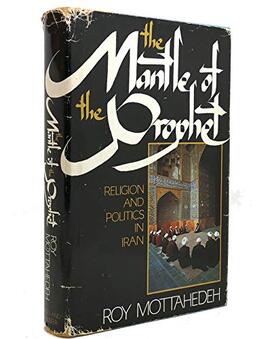
By Roy Mottahedeh, 1985
Finally, The Mantle of the Prophet by Roy Mottahedeh follows the life of a composite Iranian cleric “Ali Hashemi.” It is one of the most insightful books on modern Iran and the social world that produced the Iranian Revolution. The semi-fictionalized ethnographic narrative reads like a novel but is grounded in deep historical research. Mottahedeh wrote the book while he was on the faculty at Princeton in the early 1980s, and the main character, Ali Hashemi, is widely rumored to be based on the current Princeton Near Eastern studies professor, Hossein Modarressi.
The Latest
See all


Related News

With Prominent Journalists and Hoagies, the ‘Prince’ Celebrates 150 Years
A gala at the New York Historical raised roughly $400,000 for the independent student newspaper



1 Response
Bud Arnot
5 Months AgoGood Reads
A Princeton grad and friend recommended this site for reading. Thanks.