
We, the Class of ’01, Grew Up In an ‘Unfathomably Lucky’ Moment
Boris Fishman ’01 writes about the forces that gave the world ‘its most hopeful decade in nearly a century’
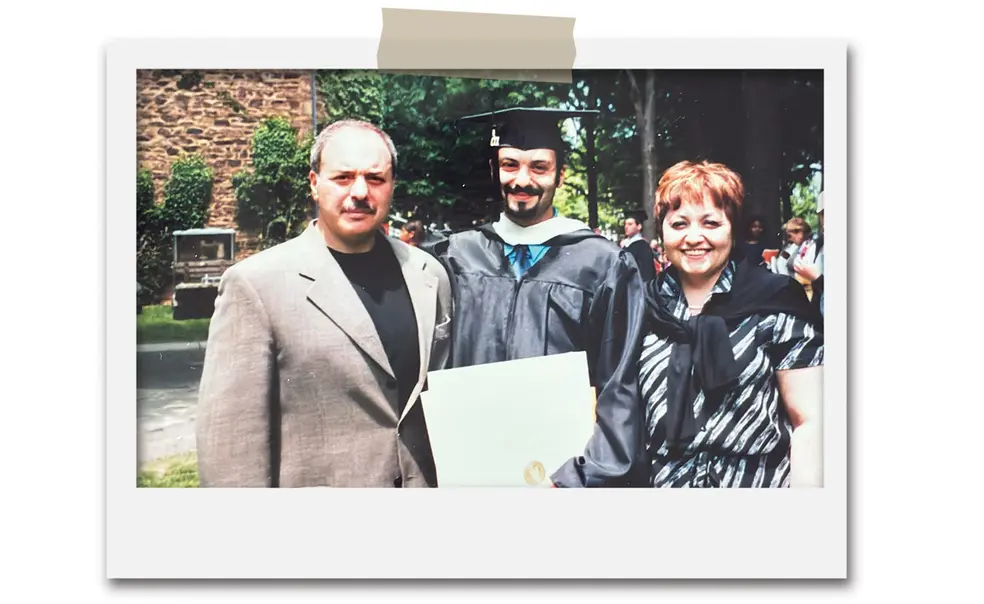

June 2001 may seem like a pivotal time mainly for the Class of 2001, which is celebrating its 25th reunion this year. For some Princeton alumni, it predates their existence. For others, it’s just another date, perhaps, like so many others. However, I ask you to think back to that moment in history.
The preceding decade was hardly peaceful: the Gulf War, the Yugoslav Wars, the Rwandan Genocide, the Second Intifada. But the relatively nonviolent end of the Soviet Union, and with it the Cold War, had given the world its most hopeful decade in nearly a century. That is the decade during which the Class of 2001, and proximate classes, were unfathomably lucky to grow up.
It was my first decade in the United States, after having immigrated from the Soviet Union with my family in 1988, at 9. Brooklyn wasn’t as pretty as I had, for some reason, assumed America would be, and money didn’t grow on trees here after all. But it was a place of subtle liberations that slowly worked their way into you, releasing the lock in your shoulders: You could be friends with whomever you wanted. You could say things without checking over those shoulders. You could make a dignified life. Here, ambition and risk were assets, not liabilities.
Most middle-aged people look back on their college years with nostalgia. Usually, it is misplaced, but ours feels like the rare exception. We came up during mostly tranquil, prosperous, quiet years when technocratic pragmatism seemed ascendant, the national budget was in surplus, smartphones and social media didn’t really exist, and the greatest apparent threat to national security came from a president’s moral indiscretions. Even Y2K had failed to materialize. Things felt so stable that many of us enjoyed the luxury of being apolitical. I don’t remember discussing contemporary politics with my fellow students at Princeton.
Of course, there were harbingers of that world’s demise. Al-Qaeda had attacked Americans in Africa and the Middle East in 1998 and 2000. The 2000 election ended in bitter division. On May 31, 2000, CBS aired the first episode of Survivor, one of whose co-producers would give us The Apprentice three and a half years later. And you know what we got from The Apprentice.
The quarter century since has felt to me like a curse: the worst terrorist attack in American history; the worst financial crisis since the Great Depression; a once-in-a-century worldwide pandemic; the curdling of globalization into nativism and authoritarianism; the acceleration of climate change; the comprehensive infiltration of technology into our lives; the extreme concentration of wealth. It is a dark, ugly time. It feels inconceivable to be apolitical now. I am always worried, always on edge. It’s hard to convey how it feels to escape a place of fearmongering, demonization, and surveillance for a place of freedom, as my family did. It’s even harder to convey when the place you fled to starts to turn into the place that you fled.
But there are always reasons for hope — especially if we look to ourselves for the answers. We come together now on a critical anniversary, not only for my class, but also for the nation. For us, if hopefully not for this country, it is a momentous midpoint. Twenty-five years from now, we will be in the twilight of our careers, and perhaps our lives. But today, and over the next decade, we will experience the peak of what we have worked so hard to achieve over the last 25 years. We have experience — even wisdom. We have influence — even power. We have settled many of the existential questions that consumed us in our 20s and 30s.
The temptation to settle into the comforts made possible by this labor is great: to focus on family, which hardly needs help claiming all our free time; to take an extra vacation; to watch another show; to pick up jiu-jitsu. To take ourselves out of the great contest for the soul and future of this nation.
We have earned that comfort. And yet, as we come together to celebrate our affiliation with an institution that defines itself “in the nation’s service,” we must also recognize how badly that ailing nation needs more from us. As we must recognize how few are as well positioned as we are to make that difference — in our communities, the halls of political power, the media, and beyond. Because we have the know-how and know-who, but also because we are the last class to have grown up with the world that existed before 2001. On this monumental date, it is our calling to rekindle the spirit of that time and to pass it along to those who are today’s version of what we were then. For they will ask: What did you do to restore this country’s promise?
What can it mean to be in the nation’s service now? That question has taken me some time to answer. A Soviet upbringing has a way of leaving one with a lifelong allergy to politics. But I have been trying. I have signed up to be a poll worker during the midterms. Next spring, for the fifth anniversary of the war in Ukraine, I am planning to walk from Lisbon to Lviv to raise money and try to remind the world that Ukraine is fighting for the very thing that brought my family to America in 1988. Perhaps most importantly, though I am a liberal, I teach at a conservative university. I relish the opportunity to complicate my students’ notions of otherness, as well as my own.
So I ask: How will you make your mark in the service of what this nation needs now? How will you own, and act on, what you believe? How will you reach across the aisle? How will you seek discomfort? How will you advocate among those who agree, and those who do not?
How will we, as Princetonians, help this nation reclaim the Spirit of 2001 and shape what comes next?
Boris Fishman ’01 is the author of four books, most recently the novel The Unwanted (HarperCollins). He is a professor of creative writing and literature at the University of Austin and splits his time between Texas and New Jersey.
The Latest
See all


Related News
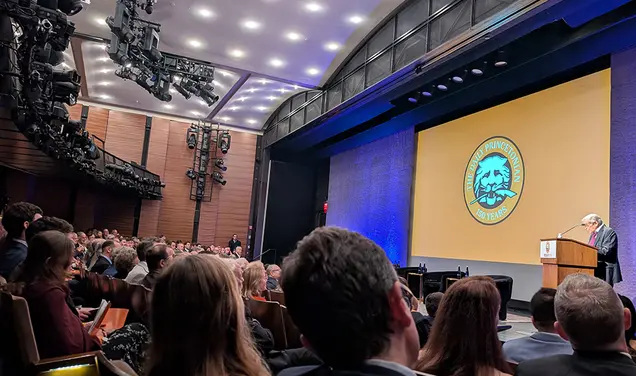
With Prominent Journalists and Hoagies, the ‘Prince’ Celebrates 150 Years
A gala at the New York Historical raised roughly $400,000 for the independent student newspaper

No responses yet