

Joe Krakora ’76 Journeys from Public Defender to Clemency Mentor
Krakora retired in 2024 after a career as New Jersey’s longest-serving public defender.
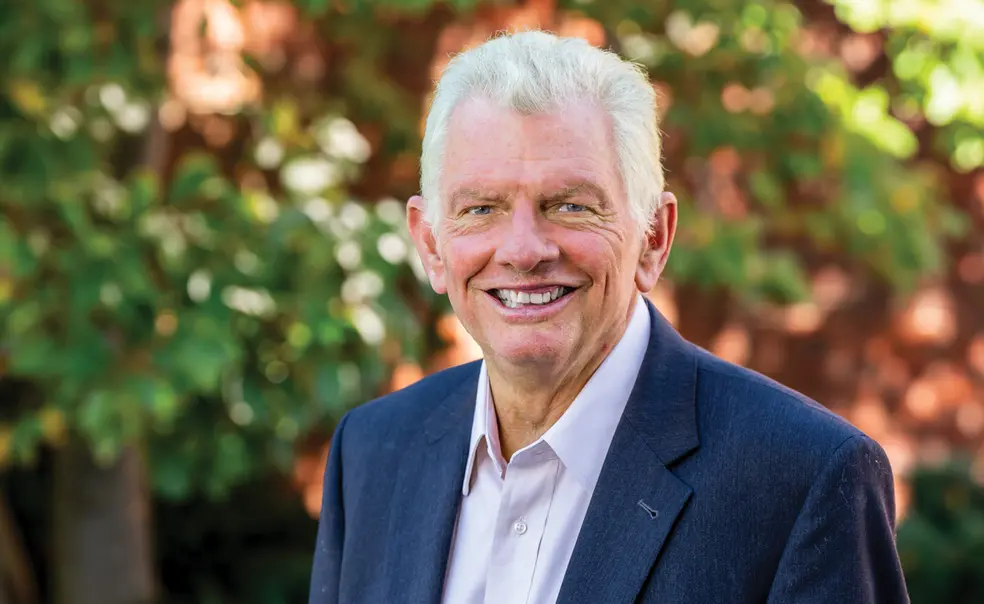

In June 2024, as he approached the end of his second and final term in office, New Jersey Gov. Phil Murphy issued an executive order expediting the state’s large backlog of clemency cases. Recognizing that they would need additional manpower, state officials responsible for implementing that order turned to Princeton’s School of Public and International Affairs (SPIA) and several dozen students for help.
Starting in the spring of 2025, more than 50 Princeton students, ranging from freshmen to graduate students, have worked as clemency fellows under the supervision of the SPIA in New Jersey initiative. The initiative seeks to engage the school with public policy issues in Princeton’s backyard. The clemency program also came along at a convenient time for Joe Krakora ’76, who is overseeing the students. Krakora retired in 2024 after a career as New Jersey’s longest-serving public defender.
Murphy’s executive order established a Clemency Advisory Board to review the applications of incarcerated individuals. It prioritized four types of cases for expedited consideration: victims of domestic violence who were convicted of a crime against the perpetrator of that violence; those who declined a plea deal, were convicted at trial, and received a much longer sentence as a consequence; those serving time for an offense that is no longer a crime; and those serving time for an offense that now carries a lesser penalty.
After an initial screening by the American Civil Liberties Union and the public defender’s office, possible clemency cases were referred to Princeton. Working in pairs under Krakora’s supervision, students interviewed incarcerated individuals via video conference, reviewed their files, and then, if they concluded that the person deserved clemency, wrote a three- to five-page supporting legal memorandum to accompany the application. The students also helped clemency applicants polish their personal statements, collected reference letters from family members and, if available, obtained letters from prospective employers who could vouch that they would have a job if released.
Krakora says he was particularly impressed by the quality of the students’ writing. “I have to say, some of what they produced was as good or better than lawyers would.”
“The student body here is much more social justice minded. They won’t call it the ‘criminal
justice system’ anymore. They call it the ‘criminal legal system,’ because they don’t think there’s any justice in it.”— Joe Krakora ’76
After all the paperwork was assembled, applications were filed with the state clemency board, which makes recommendations to the governor. Through the end of November, Murphy had granted seven clemency petitions worked on by Krakora’s students, and Krakora says he hopes more will be granted before Murphy leaves office on Jan. 20. Incoming Gov. Mikie Sherrill has not indicated whether she will continue the initiative.
The project proved attractive to the current generation of students, who are increasingly interested in issues such as mass incarceration and penal reform, Krakora notes.
“The student body here is much more social justice minded. They won’t call it the ‘criminal justice system’ anymore. They call it the ‘criminal legal system,’ because they don’t think there’s any justice in it,” he says. “My hope is that some of the clients get their petitions granted because the students got pretty invested in their cases.”
Krakora, who is serving as a faculty fellow with SPIA in New Jersey and is a SPIA lecturer this semester, worked as a public defender for 34 years. From 2011 to 2024, he served as the state’s chief public defender. In 2017, he was one of the key players in negotiating a change in New Jersey law doing away with cash bail. (See “How New Jersey Made a Bail Breakthrough,” PAW, Nov. 24, 2020.)
Anastasia Mann, a SPIA lecturer and founding director of SPIA in New Jersey, notes that because many Princeton undergraduates come from New Jersey, issues of local policy might be particularly relevant to them.
“We have an obligation to be engaged in these pressing questions,” Mann says. “So many of the kids are keen to be involved in real-world problems.”
In addition to supervising the clemency project, Krakora shared some of his long experiences as a guest lecturer in several classes, advised instructors setting up a post-conviction representation clinic, and led a panel for students interested in exploring careers in public interest law. For the current academic year, Krakora will be advising students on two types of cases that are part of what he calls a “second chance” project. The first will help people listed as registered sex offenders have their names removed from the registry after at least a 15-year period of no offenses. The second will help people on parole be released from further parole obligations after seven years without any violations.
The Latest
See all


Related News
With Prominent Journalists and Hoagies, the ‘Prince’ Celebrates 150 Years
A gala at the New York Historical raised roughly $400,000 for the independent student newspaper


No responses yet