
University ‘Pauses’ Trenton Arts Programming That Brought Local Teens to Campus
Trenton Arts at Princeton will have some funding next academic year, although it will be roughly halved and its programming is yet to be determined
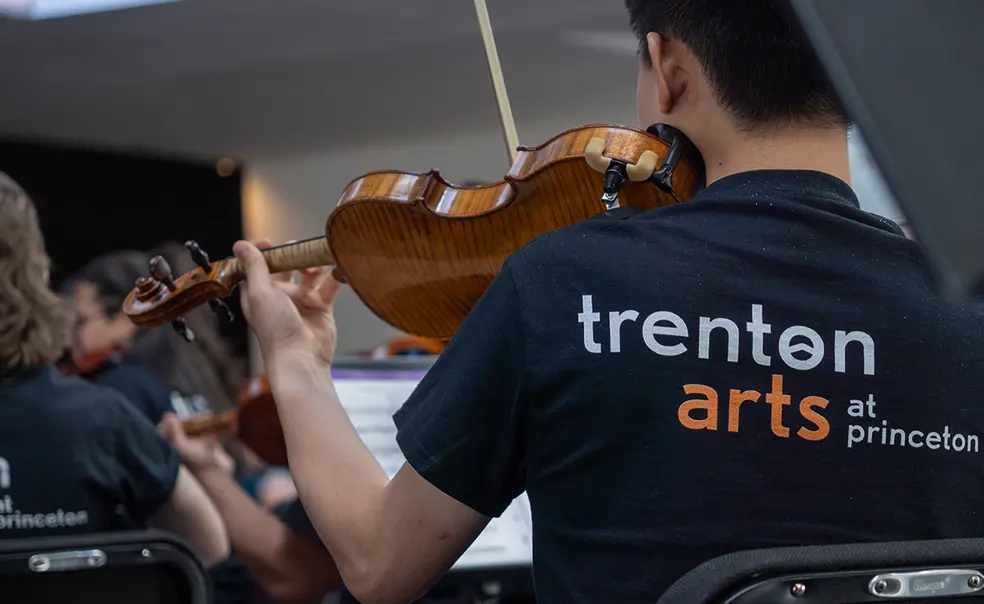

For the first time since founding Trenton Arts at Princeton (TAP) as an undergraduate, Lou Chen ’19 played violin alongside local middle and high schoolers and Princeton students on stage at this year’s annual showcase. “It was really special,” said Chen, who until last year conducted the group’s orchestra.
In the days following the April 11 show, TAP staff were told that Saturday Morning Arts, or SMArts, TAP’s signature program which brings approximately 40 middle and high school Trenton-area students to the University every Saturday morning during the school year, will be “paused” after this semester because of budget cuts.
Earlier this academic year, TAP staff were told that the program was facing cuts as part of the University’s new austere financial strategy, and that Nancy Agosto’s position as TAP program coordinator would be eliminated this summer. In response, staff tried to brainstorm different program models and ways to raise additional funding. They also surveyed the Trenton-area student participants, asking what is most important to them about the program. Responses strongly indicated that being at Princeton as a community was vital.
But according to Anabel Guerreiro ’28, a physics major and TAP student leader, despite a few months of optimistic and creative thinking, it finally became clear that the University “didn’t want to hear any ideas” from TAP, which she finds “pretty disheartening.”
“In this time of careful budgeting, we are taking a step back to evaluate the best way to continue our engagement work with the Trenton schools,” University spokesperson Jennifer Morrill told PAW. “We hope to use the next year to test out new ideas, experiment with new programming models, and develop new partnerships with the goal of creating sustainable programming moving forward.”
Chen, who officially stepped down from TAP last year and now leads the Connecticut music nonprofit INTEMPO, was particularly emotional at this year’s showcase because “the students and the staff, they all knew that TAP [is] on the ropes and they tried to give their all,” he said. “I think they saw it as their last chance to make a case for their existence. And then a week later, they’re finding out that actually that wasn’t enough.”
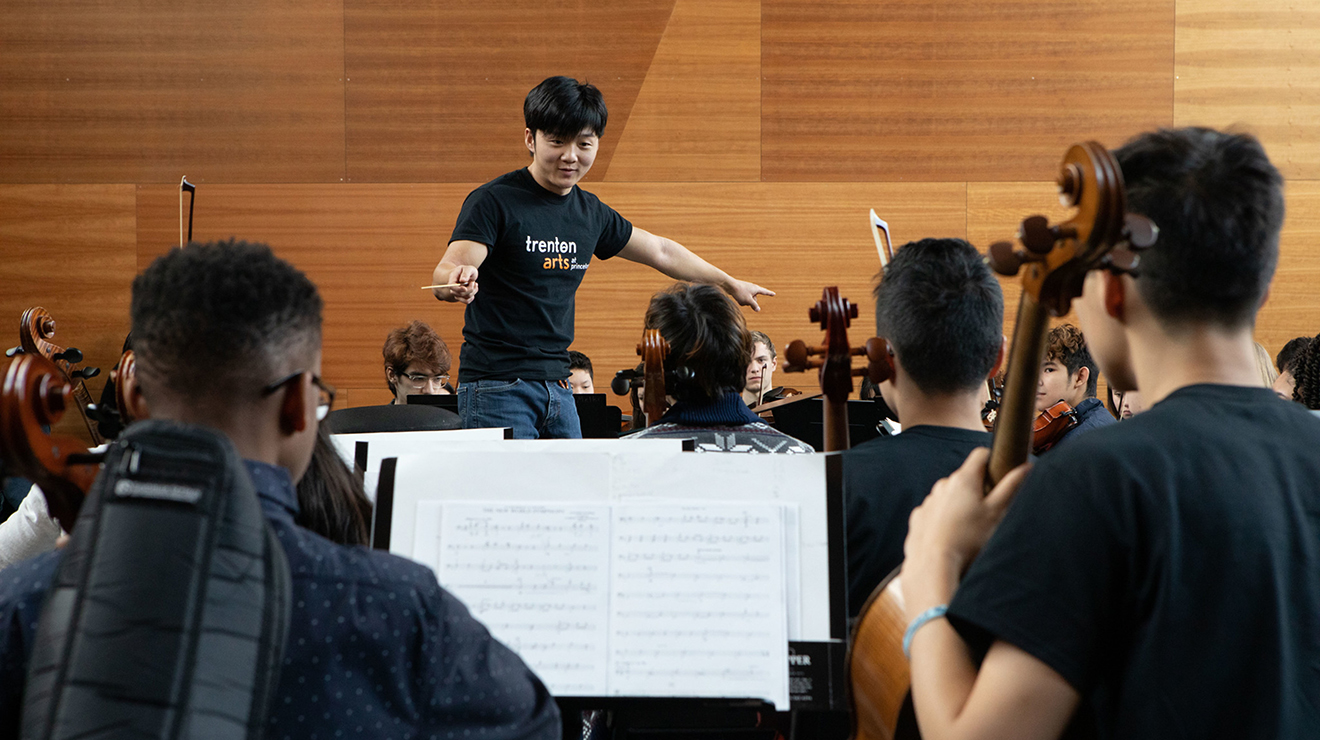
TAP was heavily featured in Princeton’s Venture Forward capital campaign, which concluded in 2025 and was dubbed the University’s most successful campaign ever. (A campaign video about TAP that Chen said was scripted by the University asked the question, “What if access to the arts was no longer left to chance?”) Chen also shared with PAW a 2023 letter from President Christopher Eisgruber ’83 in which Eisgruber wrote, “Your program enhances the lives of the students who participate, and meaningfully contributes to the cultural vibrancy of our community and our University. I appreciate all you do and look forward to the program’s continued success.”
Chen called the decision to pause Saturday Morning Arts “icky” because, in his mind, “the University used TAP and therefore Trenton when it benefited their reputation (and their pocketbook), and discarded us when we were no longer of use.”
During conversations this past week with Princeton administrators, TAP staff said they were specifically asked not to tell the Trenton students about the pause, as the University planned to announce the move this summer. But TAP staff made the decision to inform students on April 18, at their last session before graduation and the summer lull, to allow for a proper goodbye.
After Agosto gathered everyone into a circle and broke the bad news, “students were speaking up about what TAP means to them and why this is so awful that it’s being stopped in this way,” said Guerreiro.
“The impact for the students is clearly quite huge,” said Diego Solorio ’25, a TAP student leader, sixth-grade teacher, and fellow in Princeton’s Teacher Preparation Program. He believes TAP exemplifies Princeton’s unofficial motto — in the nation’s service and the service of humanity — and said that defunding the program “is more than a mistake, it’s an intentional action by the University destroying existing support for communities of color.”
Rachel Schwartz ’18, director of Trenton Youth Dancers, said that TAP will have some funding next academic year, although it will be roughly halved, and what form its programming will take is yet to be determined. According to TAP staff, TAP’s four core components — orchestra, singing, theater, and dance — may be housed under different University units or end entirely. Funding might be used to send Trenton students to concerts at Princeton, or to transport some Princeton students to Trenton; currently, more than 60 Princeton students participate as arts instructors.
“What I understand is that next year will be a year of sort of piloting different programmatic options, to see how the program could reincarnate,” said Schwartz. After that, “there’s no guarantee and a likelihood that there will be no more funding at all” for TAP, because administrators are questioning “how the whole program aligns with Princeton’s mission as a research university.”
The provost’s office has historically served as TAP’s point of contact for centralized funding. TAP is a collaboration between Princeton’s Department of Music, the Lewis Center for the Arts, and the Pace Center for Civic Engagement.
It’s unclear how other community connections will be impacted. For example, eXpressions, the University’s oldest student dance group, served as TAP artists-in-residence this year, hosting workshops for and collaborating with the Trenton Youth Dancers.
Maddie Rohde ’27, a chemistry major and former eXpressions artistic director, told PAW before the latest TAP news that eXpressions “has really benefited from this [partnership], and I hope to continue growing the program and gaining interest in it.” Rohde said the collaboration has helped remind her and other eXpressions members of the joy of dance.
Chen expressed frustration about what he sees as a lack of transparency. “The University refuses to openly acknowledge that their priorities have shifted away from meaningful community engagement,” he said, adding that he feels like “they’re just hoping that TAP and a few other similar programs kind of die a quiet death.”




16 Responses
Peter Bruce ’75
4 Months AgoEnriching Our Trenton Neighbors
Your report on the demise of the Trenton Arts Program was disheartening. This program brought Trenton-area middle and high school students to campus Saturday mornings, and the cost to the University was only $250,000 annually. This is less that the University spends on providing a free education to just one of the hundreds of students who receive full financial aid, many of whom go on to lucrative Wall Street jobs. Could we not forgo one of these full-boat Wall Street scholarships and continue to enrich the lives of our neighbors in Trenton?
Guadalupe Bueno
5 Months AgoA Community of Learning and Exploration
When I saw this news published, upset didn’t even begin to describe the emotions I felt. I had the wonderful opportunity to join TAP to explore the performing arts with friends that I knew and friends/mentors I got to meet and learn from in this program. This program is a big part of why I got introduced to theater and why I now have chosen theater for my future career. The program and its community cultivated a love for the arts that I would’ve never gotten without it. It inspired curiosity and self-led exploration and it upsets me that the children of Trenton will no longer experience that amazing community at this program. It was liberating being at TAP, and seeing it paused for this greedy reason is so telling. So, get it together, Princeton.
Ben Kim ’25
5 Months AgoMusic in the Saturday Morning Arts Program
I got to perform with and for the musicians of this program several times, and to see it terminated would be tragic.
Natalia Arbelaez Solano ’22
5 Months AgoPrinceton’s Choices Set an Example
Princeton’s unofficial motto compels its students to be in the service of humanity. TAP is the embodiment of this motto, not only because it serves the community by making the arts accessible, but also because it creates a transformative community where students regularly show up for each other and for themselves in extraordinary ways. Princeton regularly benefits from students who have already had access to amazing opportunities. But the best educational spaces should also be transformative, helping students grow in areas where they may not yet be strong. During my time as a TAP program assistant during the 2021-22 academic year, I was a constant witness to the transformations that regularly occurred — when a student sang in front of their peers for the first time; when students cheered a peer on when they got a note wrong in a performance; when students put themselves out there with earnestness and courage.
When programs like TAP are cut, it suggests that Princeton is less interested in that kind of foundational growth, particularly in the communities it claims to serve. This is a program to be proud of and to support. I agree that it feels disingenuous and exploitative that, despite all of the good these programs bring to the Princeton community and name, they are often the first to go when finances get tightened. I also worry that Princeton’s status as a prestigious, leading institution means its choices set an example for what is valuable and what isn’t. If Princeton University discards art education for students when it is no longer profitable for them, it legitimizes others to do the same.
Marie Jules
5 Months AgoThe Highlight of My Week
My journey began in middle school when I was first introduced to this program by my music teacher. As a member of TYS, it quickly became the highlight of my week. The people and welcoming environment stayed with me so strongly that I knew I had to return after the pandemic. Trenton Arts at Princeton was more than just dance, singing, theater, and orchestra; it was as supportive space to explore all types of art from creative writing, drawing, and poetry. When I returned from the program, I discovered my passion for dance and transitioned to TYD, where I stayed until I became an alumni. This program was not just a community where I felt comfortable in but it was also a platform for discovery of art.
I have met wonderful people like Rachel Schwartz, who is always eager to lend a helping hand, and many others. I would hate to see future students lose the chance to experience the transformative opportunities and a space that allows people to hone in their artistic skills like I had in the program.
Lisa Firestone ’89
5 Months AgoSupport TAP with Fundraising
Why doesn’t Princeton raise the money to continue the program?
Maria Palma
5 Months AgoTAP’s Supportive Arts Community
Saturday Morning Arts has brought not only to me, but to everyone, the opportunity to be able to do what we like most. TAP gave us the opportunity to express ourselves, and have new experiences, giving us guest performances before our rehearsals, and having our spring annual showcase where we could share what we have been working on. On TAP, we would get the opportunity to share art with people who are passionate about it as we are. I think that for most of us, TAP was our favorite part about our Saturdays, going to Lewis Art Complex where we got to meet with our friends and Princeton students, often having fun between rehearsals and lessons. During our lessons and Saturday rehearsals, I learned that I always had the opportunity to show my talent without being afraid of being judged. We were always welcome and encouraged to try new things. We all as a community supported each other. It really is a shame that the program is being “paused,” since it really gave me and others the opportunity to take our passion a step further, where we’ve been able to express ourselves and the art that makes us, outside of Trenton. I’m really hoping for TAP to come back.
Collin Thompson
5 Months AgoInspiring Experiences at TAP
It is honestly truly heartbreaking to hear that this program will not be offered to the youth of the Trenton public school the same way that it was offered to me and my peers. As we all know the music programs in the Trenton public school systems do not receive the same amount of funding and attention that many of the other programs do. The arts are a dying culture among the youth, which is quite unfortunate because music, art, and dance have been amazing outlets for allowing these youths to express themselves in ways that perhaps they would not have thought of before. My time at Princeton was actually quite amazing. The growth of my love for music and the violin skyrocketed over the years that I spent practicing and playing with the TAP group, when I first joined it was known was TYO (Trenton Youth Orchestra) and it later evolved into TAP (Trenton Arts at Princeton) as they decided to add some of the other disciplines such as choir, dance, and theater. Seeing all the kids line up outside the Trenton public schools as they awaited the Princeton bus was always exciting for me. I love music and more importantly making music with others. I would never have grown so much on the violin if I was not offered free private lessons by this program, which I believed to be an absolute blessing. We all know that not everybody can afford private lessons, especially Trenton youth, which consists of mainly children that come from low income households such as myself being from an immigrant family. I am truly saddened to see that some of the kids have had to say goodbye to this program and many from the future generations will not experience what we had. I hope there is a change to this some day. However until then, TAP remains in the hearts of those who were so fortunate enough to be a part of it. Thank you Lou Chen for allowing me to be a part of this experiences and for watching me grow up. And thank you to my private teacher Warren who gave me many inspiring conversations and even more fun memories.
Tajon Wadley
5 Months AgoA Second Home for Creative Students
I must say this is a bit heartbreaking. TAP was always more than a program to help students of the Trenton education system. As a Trenton Central High School alumni, TAP has not only helped cultivate the ideas of every student who was apart of it but also became a second home. I pray there will be a change of heart because without TAP, creative dreams and ideas will be harder to reach.
Anonie Moss
5 Months AgoThank You to TAP Staff
I’ve been attending the TAP program for six years. I’ve made many new friends, grown my musicality, and learned so much more than I could’ve on my own. My friends and I have always talked about what it would be like leaving this program our senior year of high school and watching the program grow stronger with the younger kids who we would have to leave behind. Unfortunately now, we won’t be able to do that because of the fact that we are only sophomores in high school. Now I’m not so sure if we will even be able to to graduate the proper way due to this “pause.”
I’d like to thank Lou who always made coming here every Saturday fun, and full of different experiences and opportunities. I’d like to thank Nancy for continuing to work with us no matter what. I’d like to thank everyone else who worked behind the scenes as well because as I’ve previously stated, TAP was like a second home to me. It will feel a little weird not having to wake up earlier than normal to visit my friends. I won’t even be able to see some of my friends due to the fact that the only reason we see each other is because of TAP. I’d also like to thank everyone who participated in Trenton Youth Singers with me. To Alyssa and Solan, who have always believed in me and have gotten us to do lots of things that helped us grow together as a group. I hope that even the slightest bit of hope can keep this program alive and going. I am deeply saddened to hear about this pause but I am grateful that I was able to participate anyway.
Maurice Cobbs
5 Months AgoMy Favorite Place
I just joined the TAP program not too long ago. This year was my second and all I can say is ever since I joined I gained more confidence in myself and singing (Trenton Youth Singers). The teachers, students, directors, and friends all believed in me when nobody else did. The Princeton community made me feel like I could do anything if I worked hard for it, so when I found out the news about the temporary closure, it broke me a little. Some of the most wonderful people I’ve met at TAP. I learned how to hold my skills at singing and I’m sad to see it go like this.
Robert Mohan ’26
5 Months AgoDiscarding Students’ Dreams
“What if access to the arts was no longer left to chance?” That was the bold provocation that began a widely circulated appeal for Venture Forward during my freshman year. It was moving. The appeal was all about Trenton Arts at Princeton — the innovative program that radically extended Princeton’s resources towards Trenton students with dreams.
I was never personally involved in this initiative, so all I can say is what I see: These students were used. Their quotes were circulated, their faces publicized, their dreams linked to “Donate” pages. Then, once there was little else to extract from them, they were discarded.
Theo Wells-Spackman ’25
5 Months AgoMutually Beneficial Community Engagement
This seems like absolutely the wrong call. Beyond the fact that this was one of the most effective and mutually beneficial community engagement programs the University has run in recent years (to my mind), the optics of using it centrally in a capital campaign the year before slashing it are extremely unfortunate. In several cases TAP offered programs that did not exist at all in some of the sending schools — like chorus. And it offered the rare opportunity — for both Princeton volunteers like me and the visiting students from Trenton — of consistent, recurring meetings over the course of years. In the scheme of the University, I do not believe this program can reasonably be described as expensive for what it yielded, particularly given the two seasons of weekly instruction and programming its annual budget was covering. If the University is cutting fat this year, I don’t think this is the right place to look for it.
Jennifer Hernandez Alvarez
6 Months AgoHoping for a Saturday Arts Comeback
I’ve been a member of TAP for about three years now. I graduated from Trenton Central High School in 2024. I left TAP for about a year, then came back this year, 2026. I already expressed how I felt about the news to all the TAP members, and I told them I was heartbroken to learn that no other Trenton student with artistic talent will be able to experience Trenton Arts at Princeton. I’ve had so many memories with teachers, coaches, and friends at TAP. All the rehearsals, all the lessons, the occasional trips, and our annual spring showcase. TAP was like our escape from our lives in Trenton. I truly believe that everyone just overlooked Trenton kids that nobody cared for us or our talents. Everyone I know has put a label on Trenton and the kids from Trenton. “Ghetto” is what they call us. Kids from Trenton have talent but without practice and experience, they can never hone those skills. Only we Trenton kids know what kind of resources we have and it ain’t much. TAP was a helping hand to us all. The resources we lacked in school, they would have there for us on Saturdays. With all the lessons, rehearsals, and practices, we all could perfect our singing, dancing, acting, and music. I just hope TAP does come back from this “pause” so more kids from Trenton can experience the amazing Saturdays at Princeton. I hope we do not get overlooked like we always do. Thank you TAP, Nancy, Lou, Jenia, and all coaches and teachers for not overlooking our talents and helping us perfect them as much as possible.
Julio Deleon
6 Months AgoLost Opportunity for Musicians
I was a part of the Trenton Youth Orchestra and to be completely honest, I never cared about the program. Finding all of this out in such short notice and in such a way almost feels like I got thrown away. I felt something lost within. That’s how I’m currently realizing how much this program actually meant to me and not just as a student but as an overall being. I’m thinking back to those moments I actually felt happy about my performance and being able to sit with Princeton students and really just enjoy that time while getting better as a musician. I’m thinking back to the one-on-one lessons I’ve had and how much I stick to what I was taught. I loved this program, I just ignored it because I knew I was always welcomed back.
Samantha Tejada
6 Months AgoMy Home Away From Home
TAP had always been my escape. Even if a few of the people who hurt me were in the program, it never mattered enough. During the week I was a lonely mistreated kid. But on Saturdays, oh I was everything. A dancer, a singer, an actor, I was everything I wanted to be. It helped me realized just how badly I wanted to perform as a career, it helped me get rid of my stage fright. It even helped me make friends despite my social phobia. And for the first time in a long time they are really good friends. It sickens me that a program made to uplift those less fortunate is being cut off. If Princeton is for everyone then why not us? What did we do that makes us undeserving? What did any of the programs do? I will support this fight any way I can, not just for TAP but for other programs too. I can’t watch something so beautiful die because of greed. TAP is my home away from home. I’m not letting it die.